- From Hope to Home: Adoption and Foster Care News
- Posts
- March 2026 Newsletter
March 2026 Newsletter
No family should walk in hard seasons alone.

Tracey Albrecht
March 16, 2026
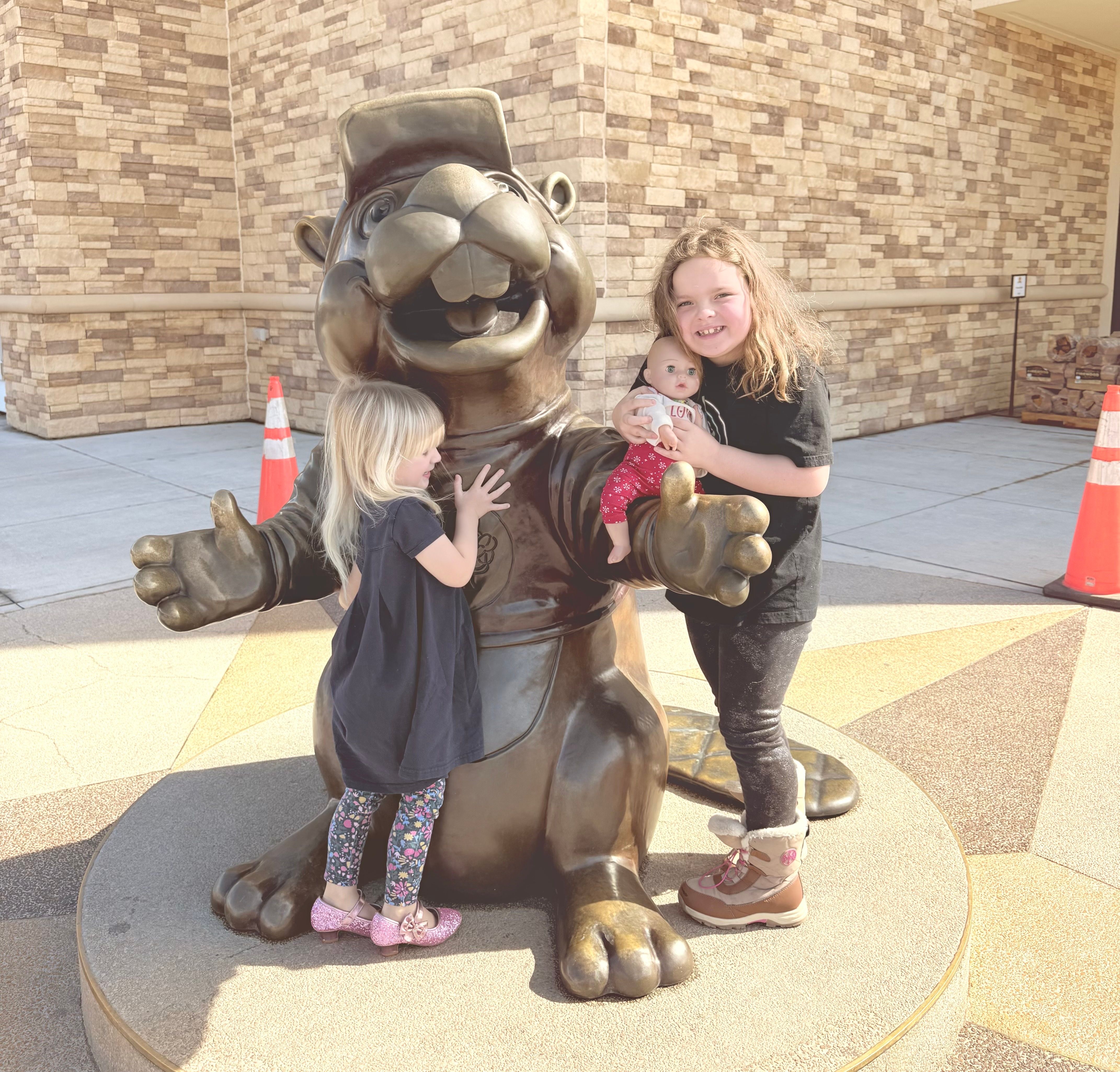
In our travels to and from Illinois a non-negotiable stop is at Buc-ees.
It Takes a Village: Honoring Every Hand in the Journey
This March feels like a slow exhale after a long season of transition… Our first stretch of time without traveling back and forth to Illinois, and the first where we’re truly starting to settle into life here in South Carolina. The girls are beginning to feel at home again, and I’m finding a rhythm that feels a little more familiar each day. Grief is still there, woven quietly into the background, but life is taking slow steps forward.
When I think back on my dad’s fall, his time in the hospital and moving him across states to assisted living, and then saying goodbye at Christmas, I see more clearly the people who helped carry us through.
Family and friends reached out across the miles, checking in, encouraging me, praying, reminding me I wasn’t alone. And when I was in Illinois, friends made sure the girls were cared for, met me for quick dinners, and showed up in ways that gave me just enough strength to face another day.
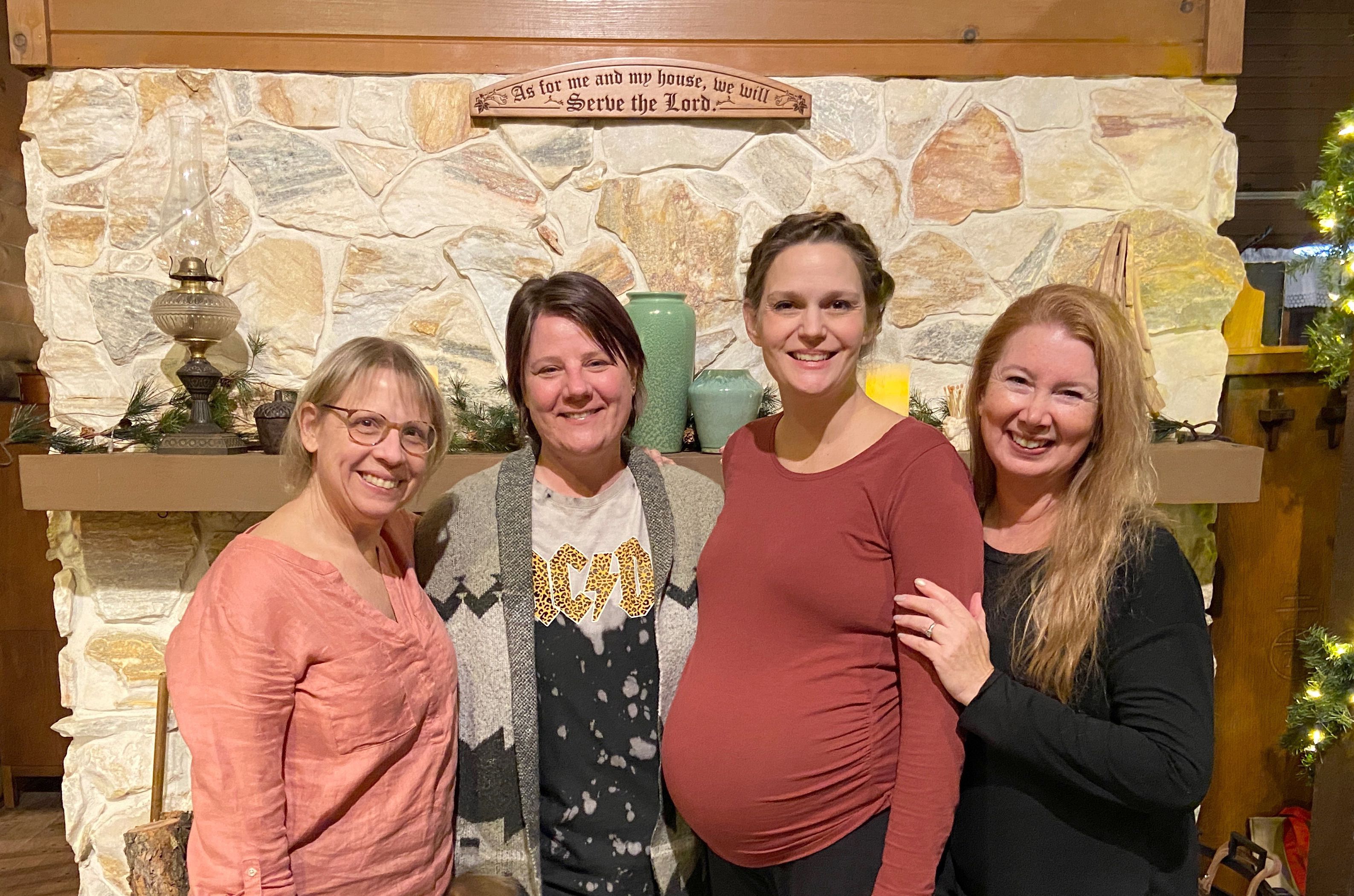
These life group ladies showed up with so much prayer, love, and support while I was in town for my dad’s celebration of life. I’m so grateful for them.
That experience reminded me how much it truly takes a village, not just during easy times, but especially when life turns upside down. Every family, especially foster families, knows how vital that support is. We simply aren’t meant to do this life alone.
This month, we lift up the helpers who make that possible every day. March is National Social Worker Appreciation Month — a time to honor the people who walk alongside families in their hardest seasons. Case managers, social workers, investigators, agency staff, therapists, teachers… They are the steady presence behind the scenes, holding space for healing and hope.
As we continue building our own sense of community here in a new state, I carry deep gratitude for all who have helped us, near and far. You remind me that even across distance, care travels. And every phone call, every shared meal, every gift, every act of kindness becomes part of the village that keeps us all standing.
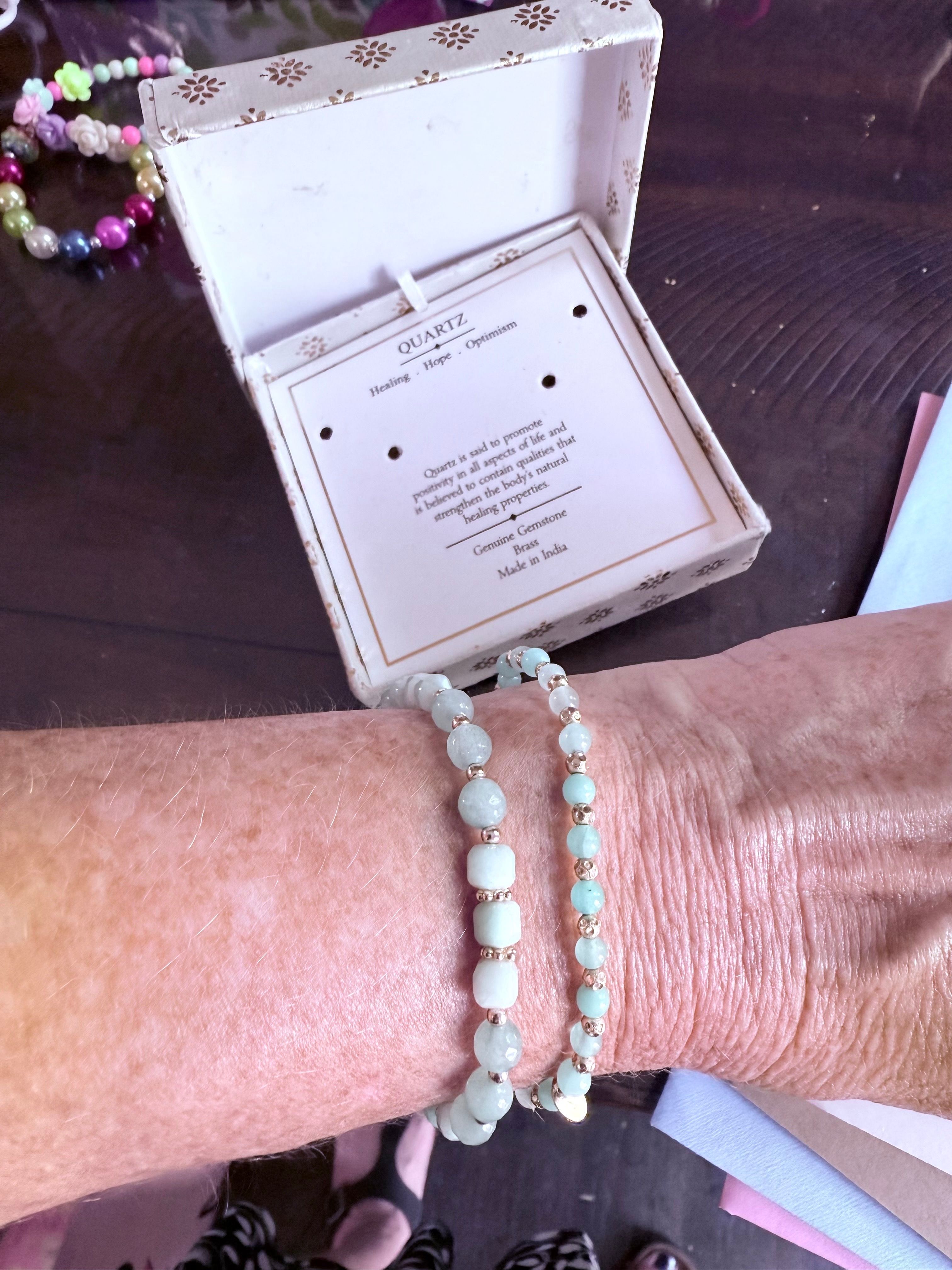
A little bracelet from my college design school friends—a reminder of the three of us and the years we’ve stayed connected, even from afar.
With gratitude,
Tracey

IN OUR HOUSE
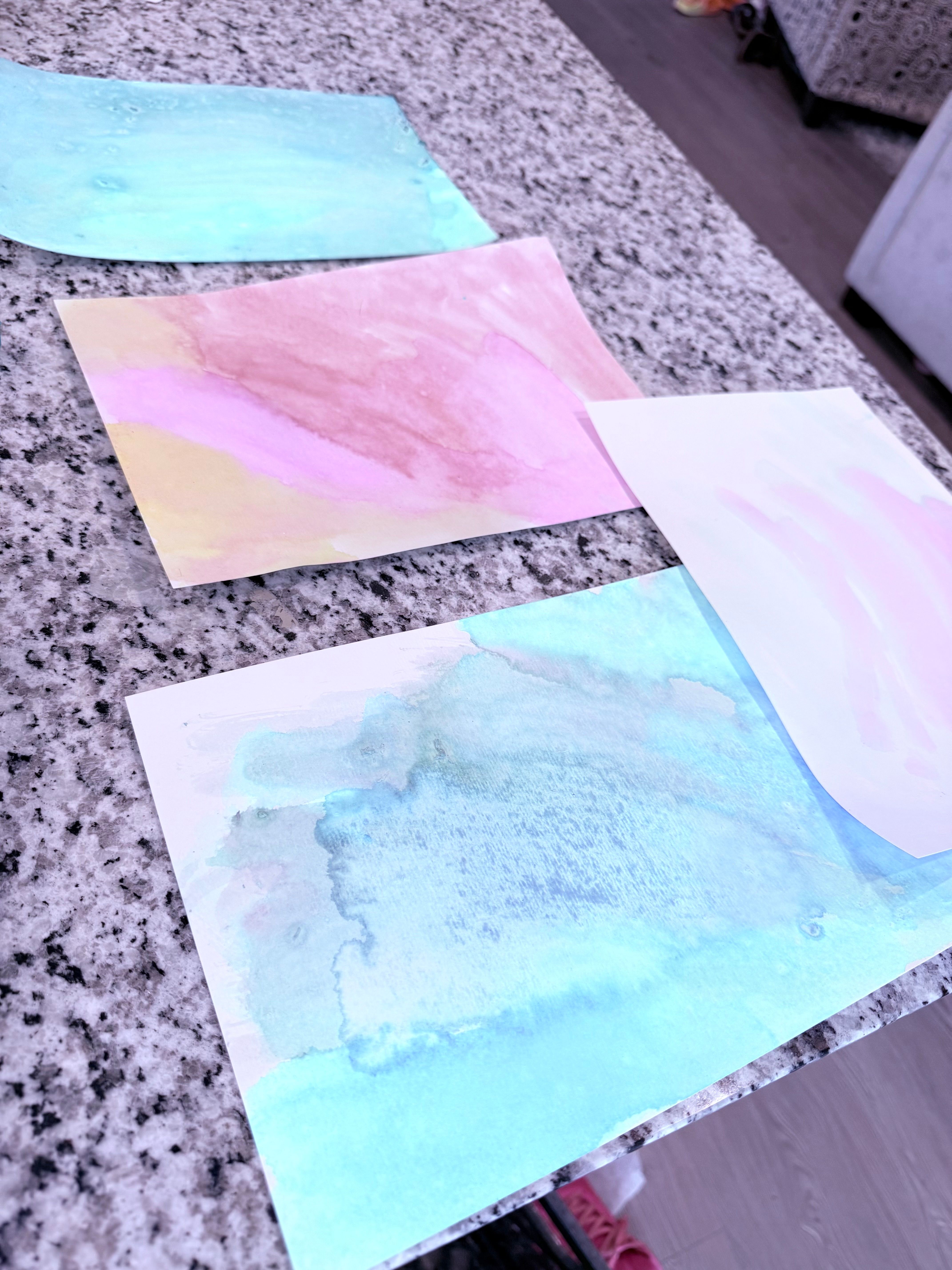
Watercolor paper the girls did to make cards and write notes on the inside.
Ways Kids Can Thank Their Caseworker This March
Behind every foster care story, there are people who quietly show up again and again to support, protect, and guide—and caseworkers are a big part of that village. This month, as we recognize Social Worker Appreciation Month, it’s a beautiful opportunity to help our kids express gratitude in simple, meaningful ways.
Whether your child sees their caseworker regularly or remembers them from an earlier season, even the smallest “thank you” can remind these dedicated professionals that their work truly matters. Here are a few easy, heartfelt ways kids can show appreciation—right from where they are.
Personal, Kid-Made Thank-You's
Draw-A-Memory Picture
Have your child draw a favorite memory with their worker (a visit, car ride, or time they felt safe) and add "Thank you for being with me."
Short Thank-You Note
Help them write 1–3 simple sentences like:
"Thank you for listening to me."
"Thank you for helping my family."
"Thank you for being kind."
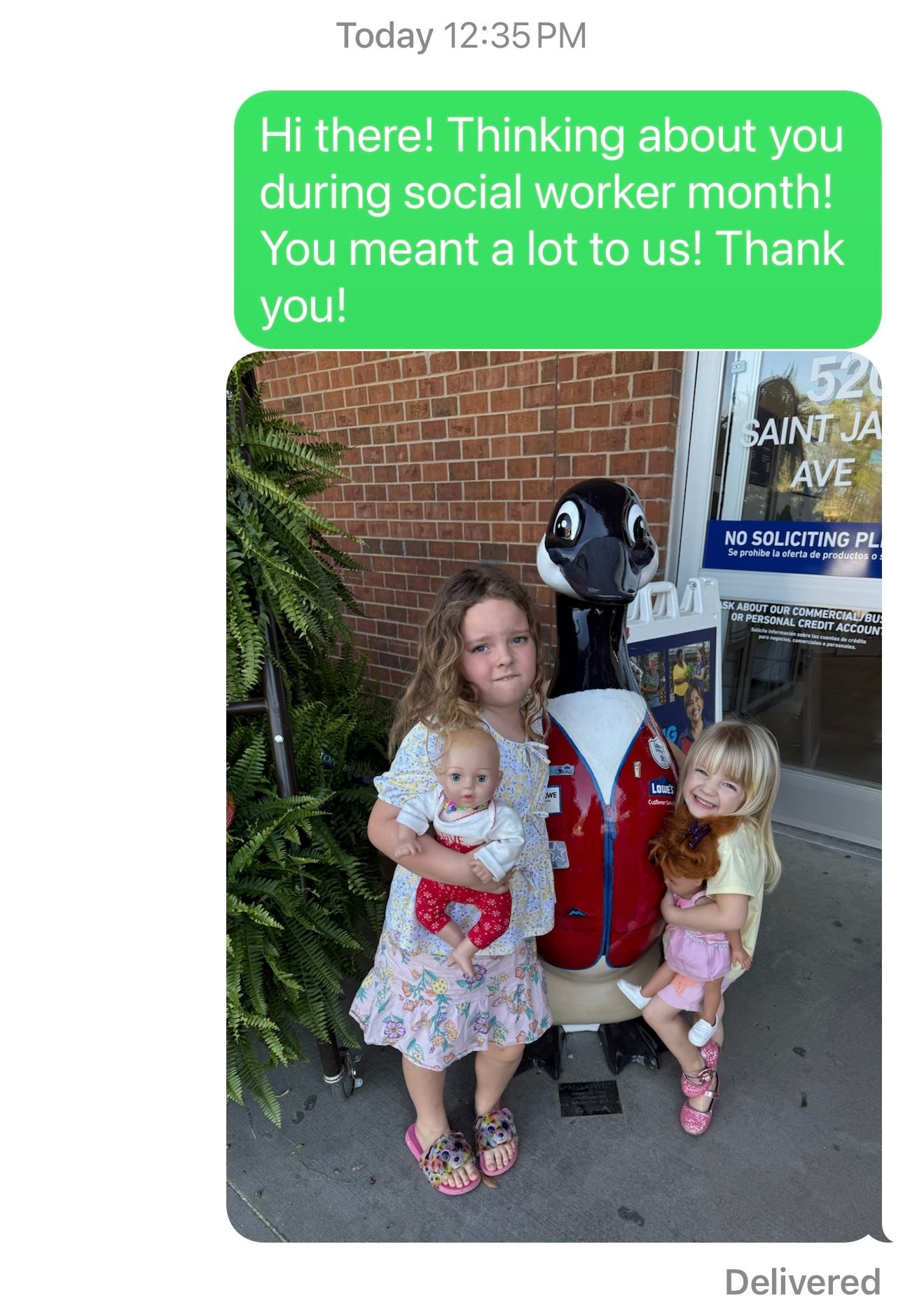
The girls wanted to say thank you to their incredible caseworker, so we sent this text.
"Three Things" Card
Fold a paper in thirds and label: "You help me," "You help my family," "You help other kids." Let them draw or write one thing in each section.
Small Gifts That Feel Thoughtful
Favorite Snack Bag
Let your child help pick a snack or candy and attach a tag: "Thanks for being so sweet."
Comfort Kit
Kids help assemble a small bag with tea, candy, and a sticky note: "For busy days—thank you for helping kids like me."
Desk Sunshine
A child-decorated bookmark, keychain, painted rock, or small craft with a word like "Hope" or "Thank you" they can keep on their desk.
Interactive Appreciation Ideas
"You Help Me When…" Sheet
Write the sentence starter "You help me when…" and let your child finish it with words or drawings.
Joke or Encouragement Card
Older kids can write a favorite joke or Bible verse/quote with "I hope this makes you smile like you help me smile."
Visit-Day Surprise
On a scheduled visit, hand the worker a small envelope with a drawing or note and say, "I made this for you for Social Worker Month."
For Kids Who May Not Remember Their Caseworker
Then-And-Now Photo Card
Attach an old photo from when the caseworker was involved (if you have one) alongside a current picture of your child.
Front of card:
"Thank you for being part of my story."
Inside:
"You helped me during a really important time. Here's how I'm doing now: [child's current update—grade, hobbies, favorite thing]. Thank you for helping me when I needed it most."
OR
"Look How I've Grown" Postcard
Use one current photo and write:
"You helped me during a really important time. I'm bigger now, and I'm doing ___ (playing soccer, loving school, etc.). Thank you for helping me."
OR
Memory-Bridge Note From Caregiver
"You walked with us during a season [child's name] may not remember, but we do. We're including a photo from then and one from now to show how far they've come. Thank you for being part of that journey."
Choose what feels right for your child and your family. Even the smallest gesture reminds caseworkers their work matters.
BOOKS I’M READING
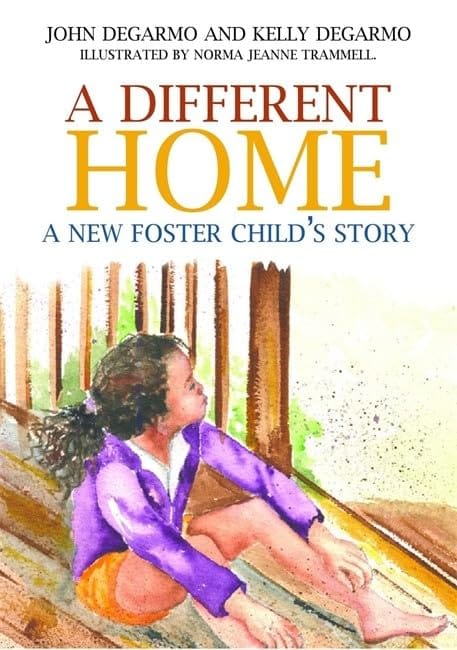
A Different Home: A New Foster Child’s Story
By Kelly DeGarmo and John DeGarmo
This is one of those books I often think about when I consider all the people it takes to care for a child in foster care. A Different Home gently walks through a child’s experience of entering a new foster home, capturing the uncertainty, the questions, and the quiet hope that begins to grow along the way.
What I appreciate most is how it reflects the many hands involved in that journey. While the story centers on the child and their new foster family, you also see the presence of the caseworker—the one helping guide the transition, offering reassurance, and making sure the child lands in a safe place. It’s a subtle reminder that foster care is never just one person stepping in… it truly takes a village.
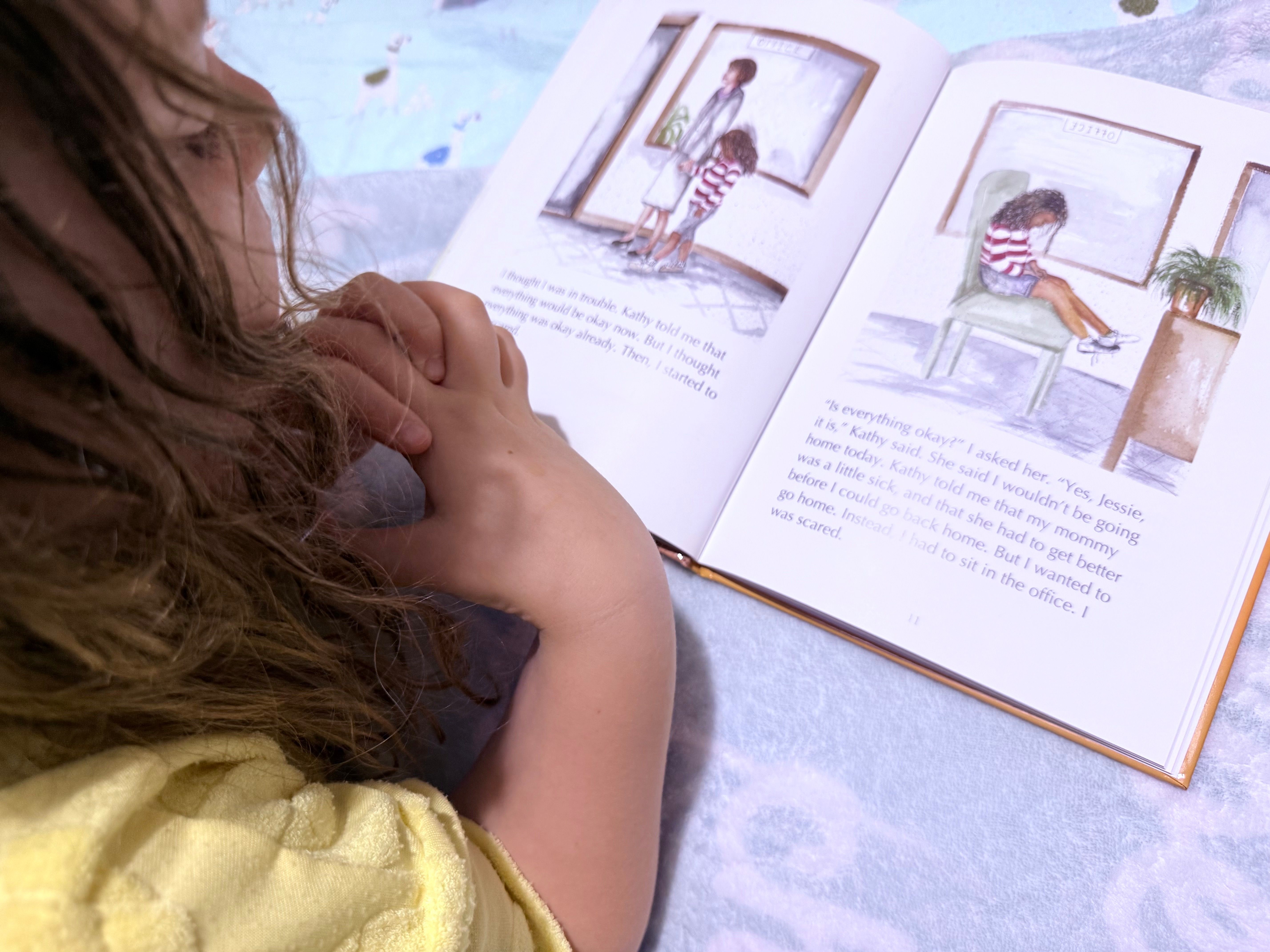
Seeing her read the book I recommended made my day—love these little moments of learning and fun.
For kids, this book brings comfort and understanding during a time that can feel confusing and overwhelming. And for us as foster parents, it’s a beautiful reminder that we’re not doing this work alone. There are people behind the scenes—caseworkers, support teams, advocates—each playing a role in caring for these children.
Especially as we recognize Social Worker Appreciation Month, this story helps open the door to conversations about the many people who show up, often quietly, to make foster care possible. And that’s something worth honoring.
👉 Buy A Different Home: A New Foster Child’s Story on Amazon: https://amzn.to/4biqRlE
FEATURED BLOG POST
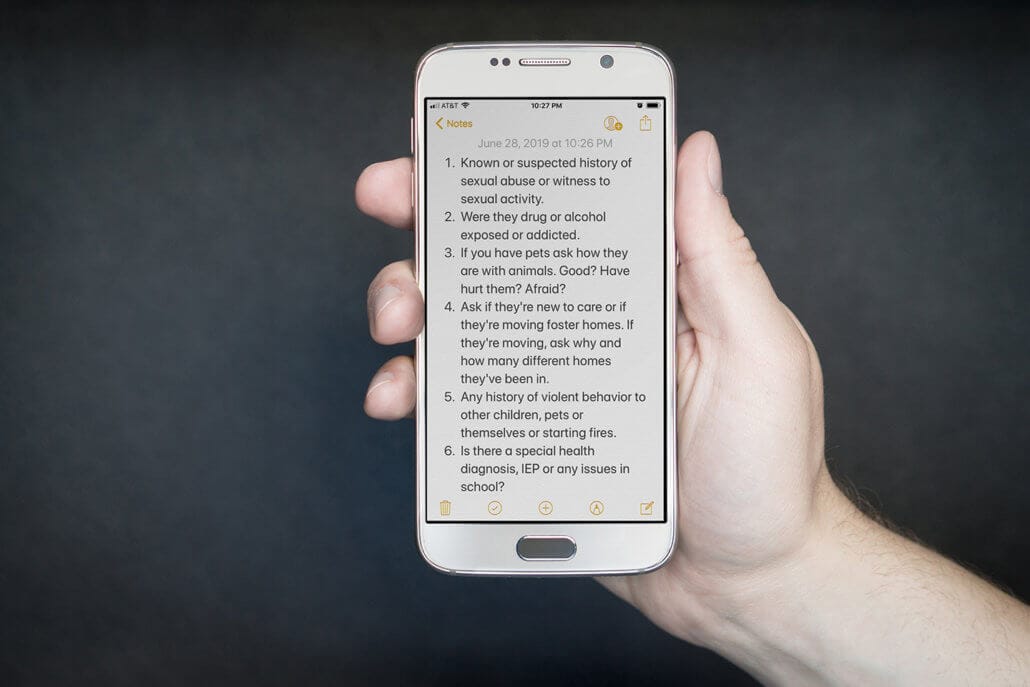
6 Questions to Ask Before a Foster Placement
Stepping into a new foster placement isn’t something we do alone. Behind every decision, every transition, and every family welcome is a whole network of support, from caseworkers and social workers to biological families, teachers, and the community around us.
In 6 Questions to Ask Before a Foster Placement, I walk through key questions that help foster parents prepare mentally, emotionally, and practically before saying “yes” to a placement.
This post is about being thoughtful before the door swings open to a new child. It’s about clarity, confidence, and connection, not just with the child, but with the team supporting them. Questions like “How will this placement impact our current family?” and “What support can we expect from the agency?” help you think through the placement from every angle, honoring the many people who play a role in this journey.
This post highlights how every placement decision is supported by a wider circle of people who care for children and families. It’s also a reminder that welcoming a child into our home is something we do alongside many others who support the journey. We partner with professionals, with community, and with God, asking not only what we need, but how the broader support system can help a child thrive.
👉🏻 Read it here: 6 Questions to Ask Before a Foster Placement
Do you know someone that is thinking of fostering? We would love it if you would forward this email to them so they can sign up!

This newsletter may contain affiliate links, meaning, I get a commission if you decide to make a purchase through my link, at no cost to you.